Fresh Cedar Shingles on a Flat Roof Parapet Wall
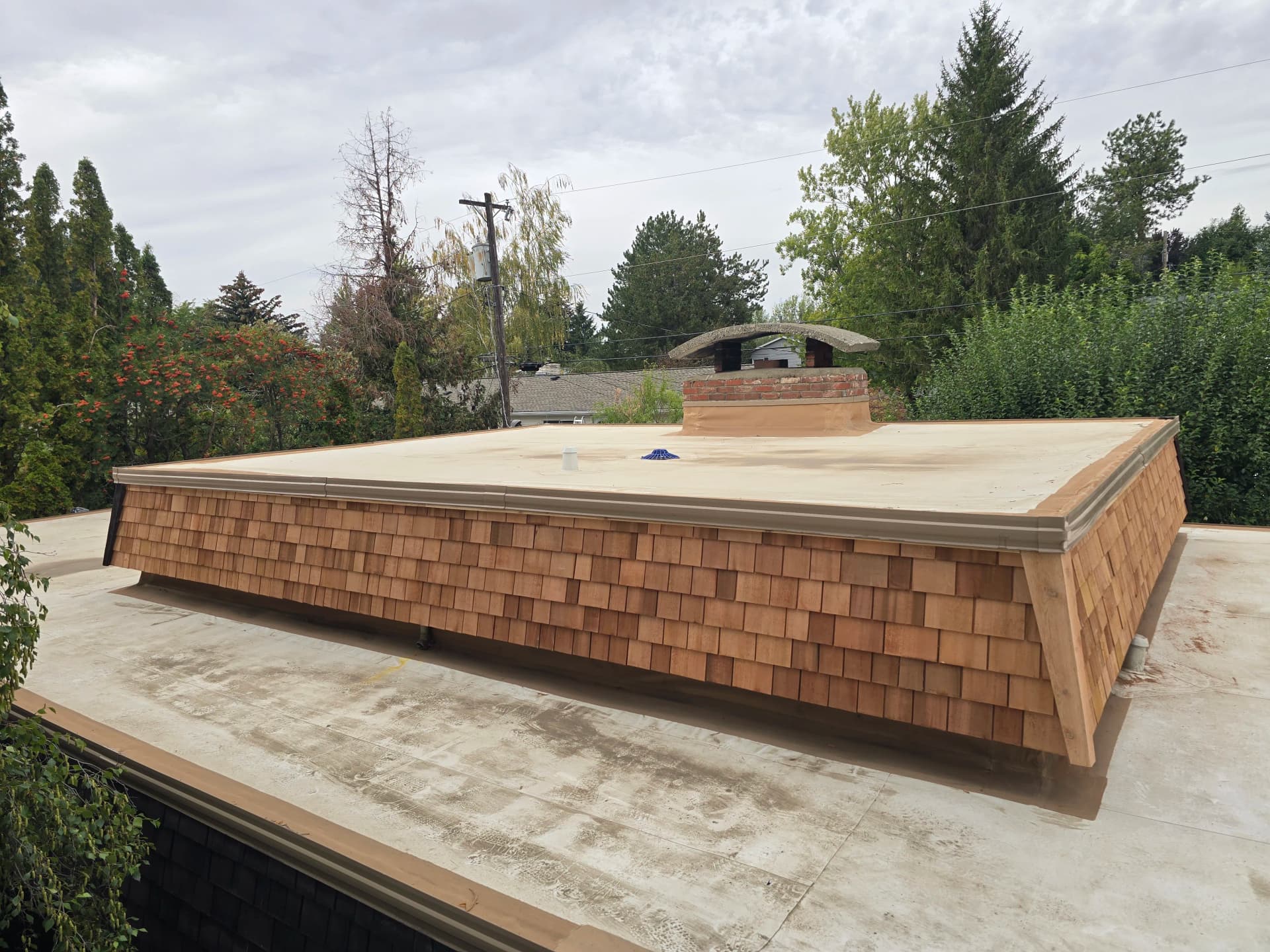
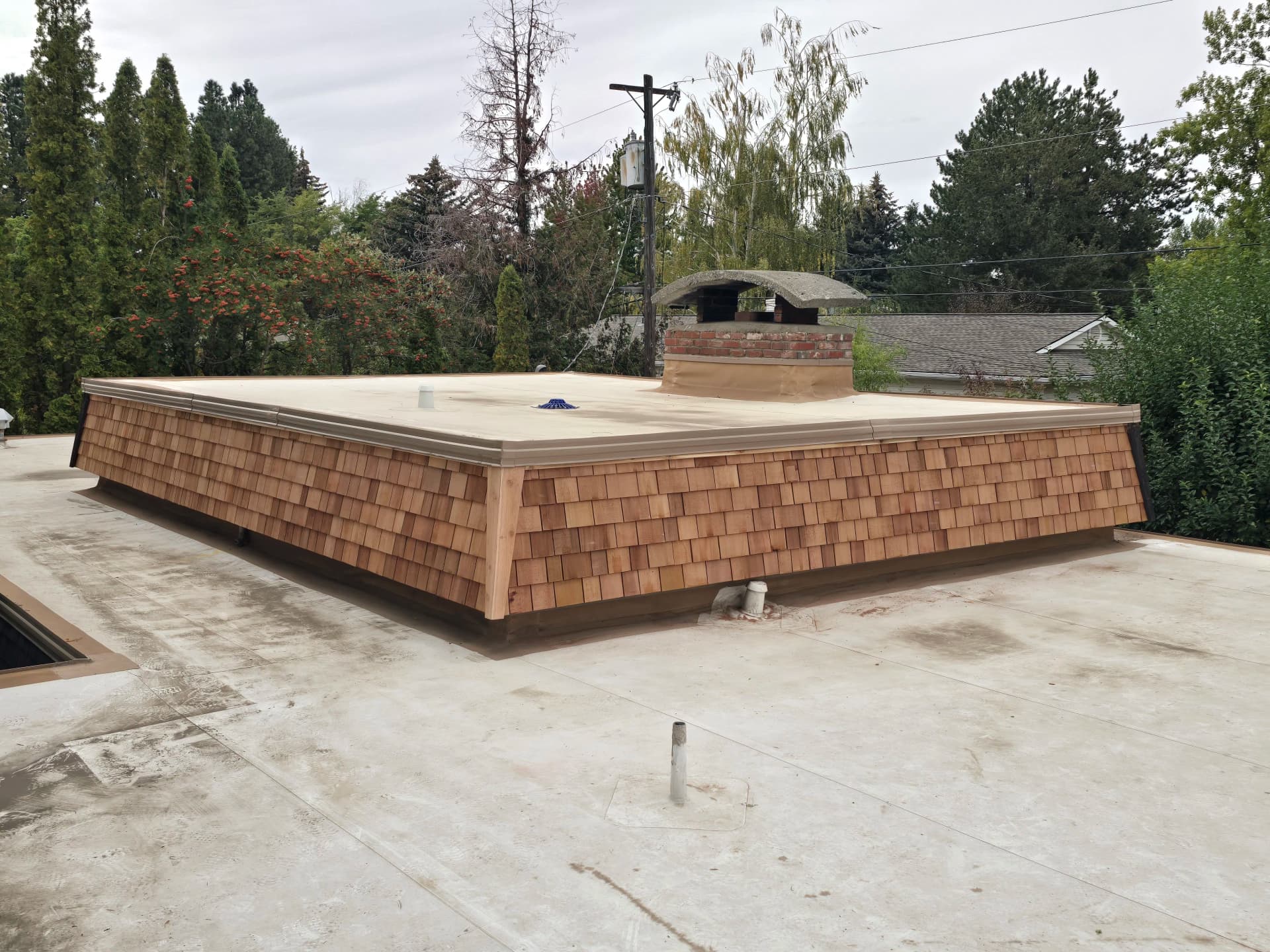
Aging cedar shingles don't just look rough - they stop doing their job. Once the wood starts cracking, cupping, or pulling away, moisture finds its way in fast. And on a structure like this one, with a flat roof and a raised parapet wall wrapping the entire perimeter, water intrusion is a serious problem. That's exactly the kind of situation we were brought in to fix.
What we were working with here was a parapet wall that needed a full cedar shingle replacement. The old shingles were worn out and no longer providing the protection the structure needed. So we stripped them down and started fresh with new cedar - laid tight, cut clean, and installed in a way that gives the wall real, lasting coverage on all four sides.
Cedar is a great material for this kind of application. It's naturally resistant to moisture and rot, which matters a lot when you've got a wall that takes weather from every direction. And when it's installed correctly - with consistent spacing and solid backing - it holds up well over time. This wasn't just a cosmetic fix. The goal was to get this structure properly protected.
The corner work is where a lot of installers cut corners - no pun intended. Getting clean, tight corners on a four-sided parapet takes patience and attention to detail. We made sure each corner came together the right way, so there are no gaps or weak points where water can sneak in. The metal cap flashing along the top edge ties everything together and keeps the top of the wall sealed off.
Cedar shingle installation like this is one of those jobs that looks straightforward but has a lot of moving parts. Get it right, and the structure is protected for years. Get it wrong, and you're dealing with moisture damage that's a lot more expensive to fix than the shingles ever were.