24 Gauge Standing Seam Metal Roof With Zero Unnecessary Seams
On a standing seam metal roof, the details you can't see after the job is done are often the most important ones. Panel length, gauge, and how the flashing is integrated - these aren't things most homeowners think about, but they're exactly what separates a roof that holds up for decades from one that starts causing problems in year five.
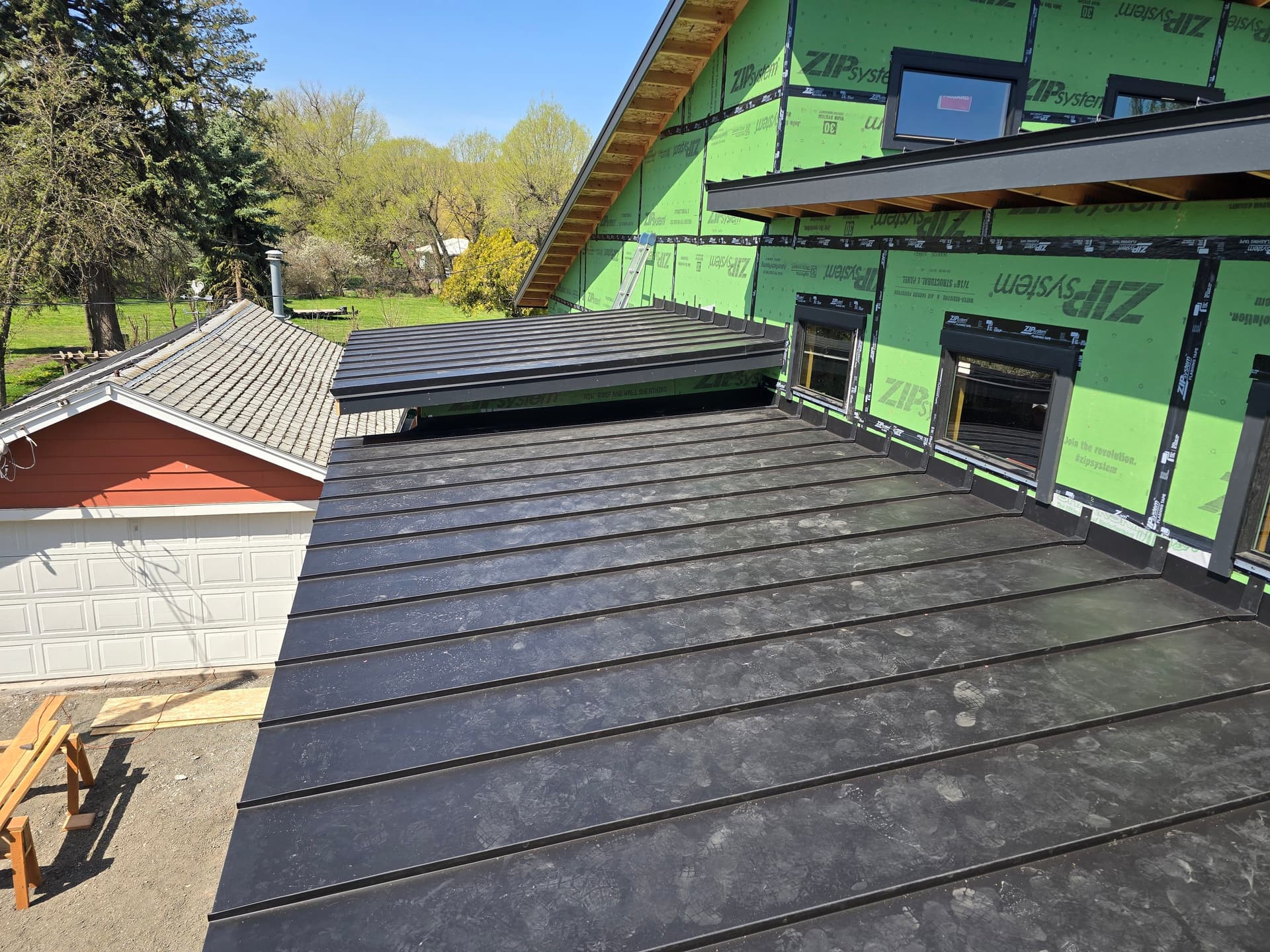
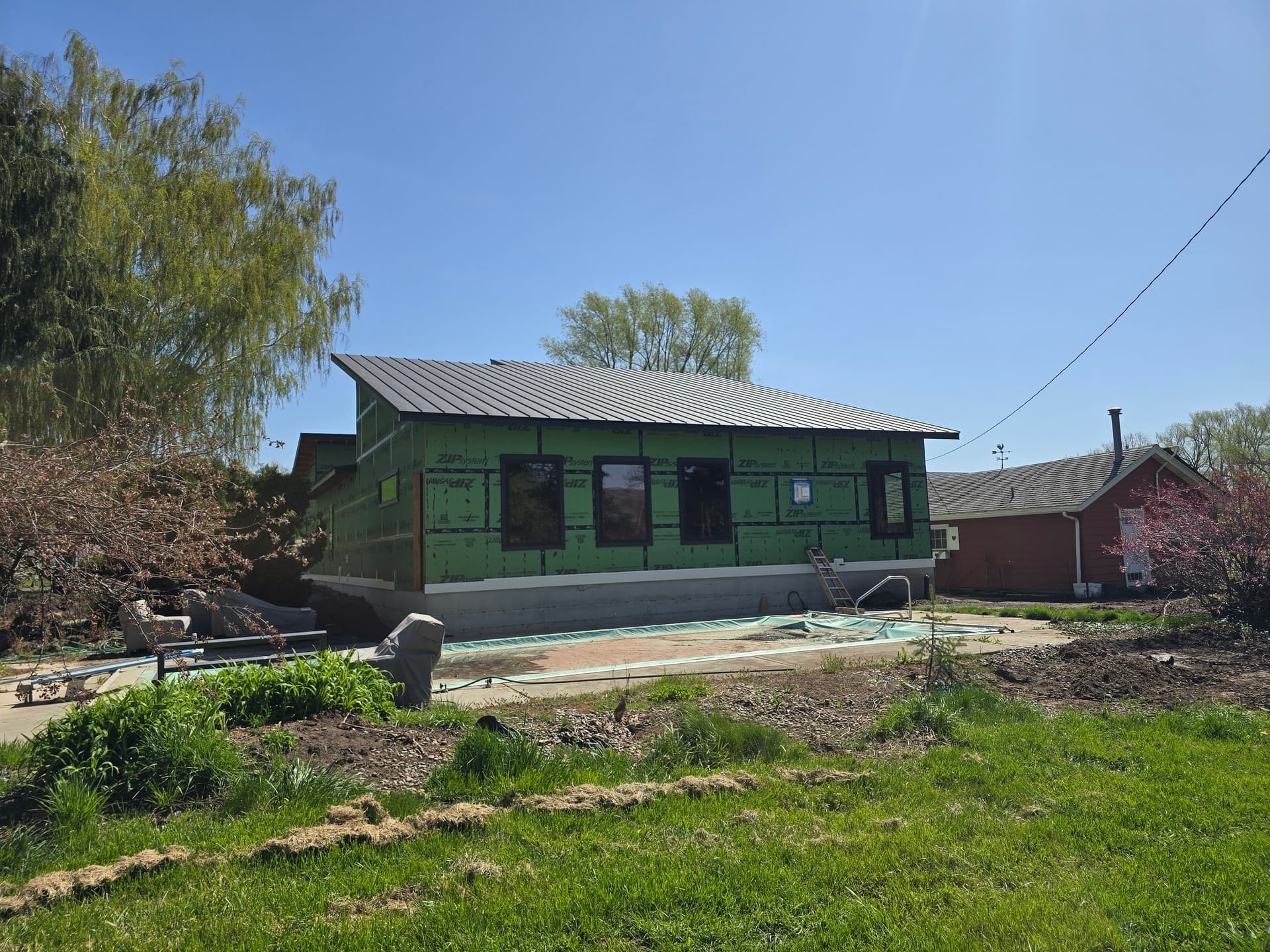
On this build, we rolled panels on site up to 51 feet long. That's not the standard approach, but it's the right one. When you run a panel from ridge to eave in a single piece, you eliminate the horizontal seams that are common failure points on shorter panels. Fewer seams means fewer places for water to find its way in. It also means the system looks cleaner and performs more consistently over time.
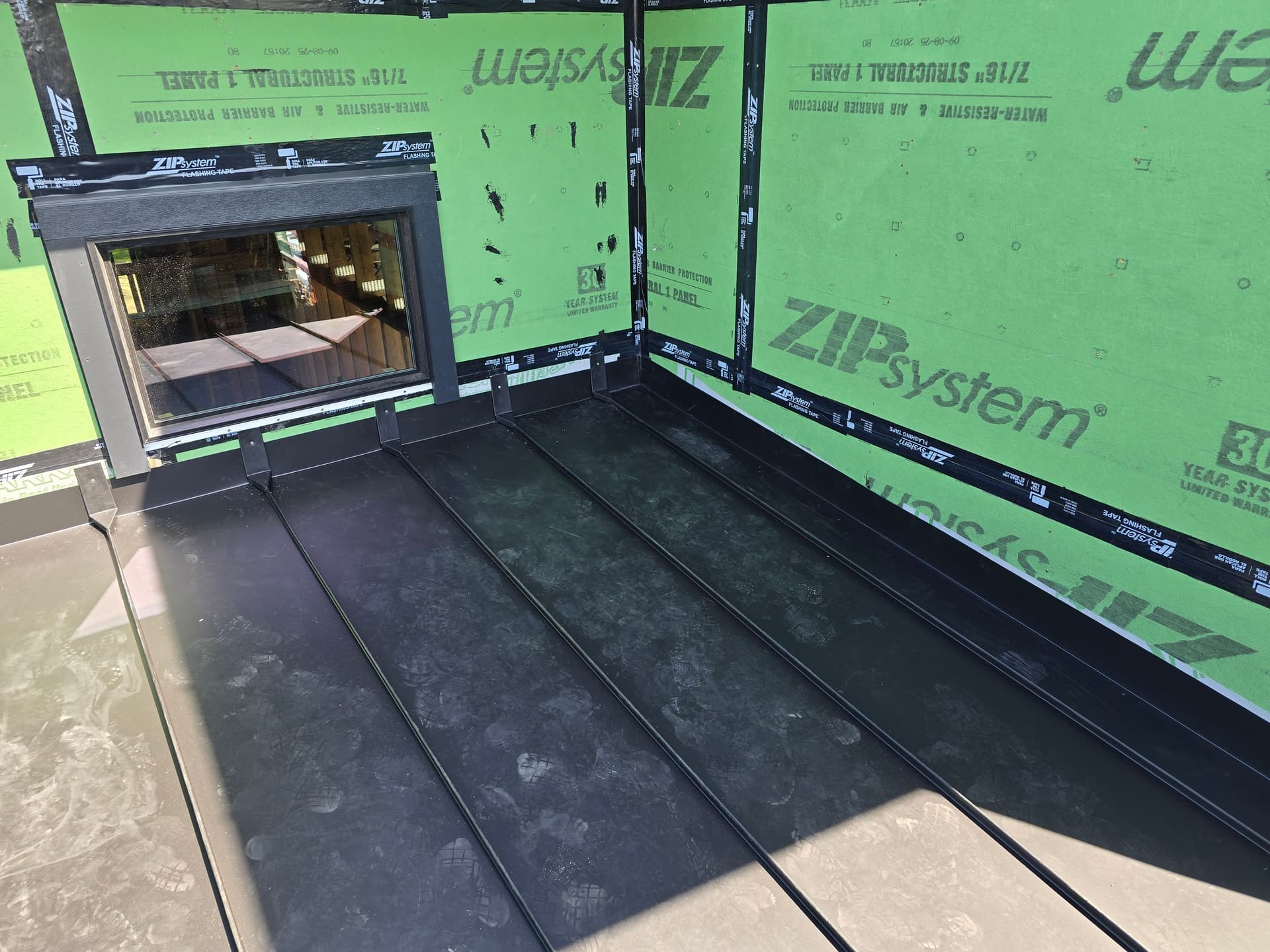
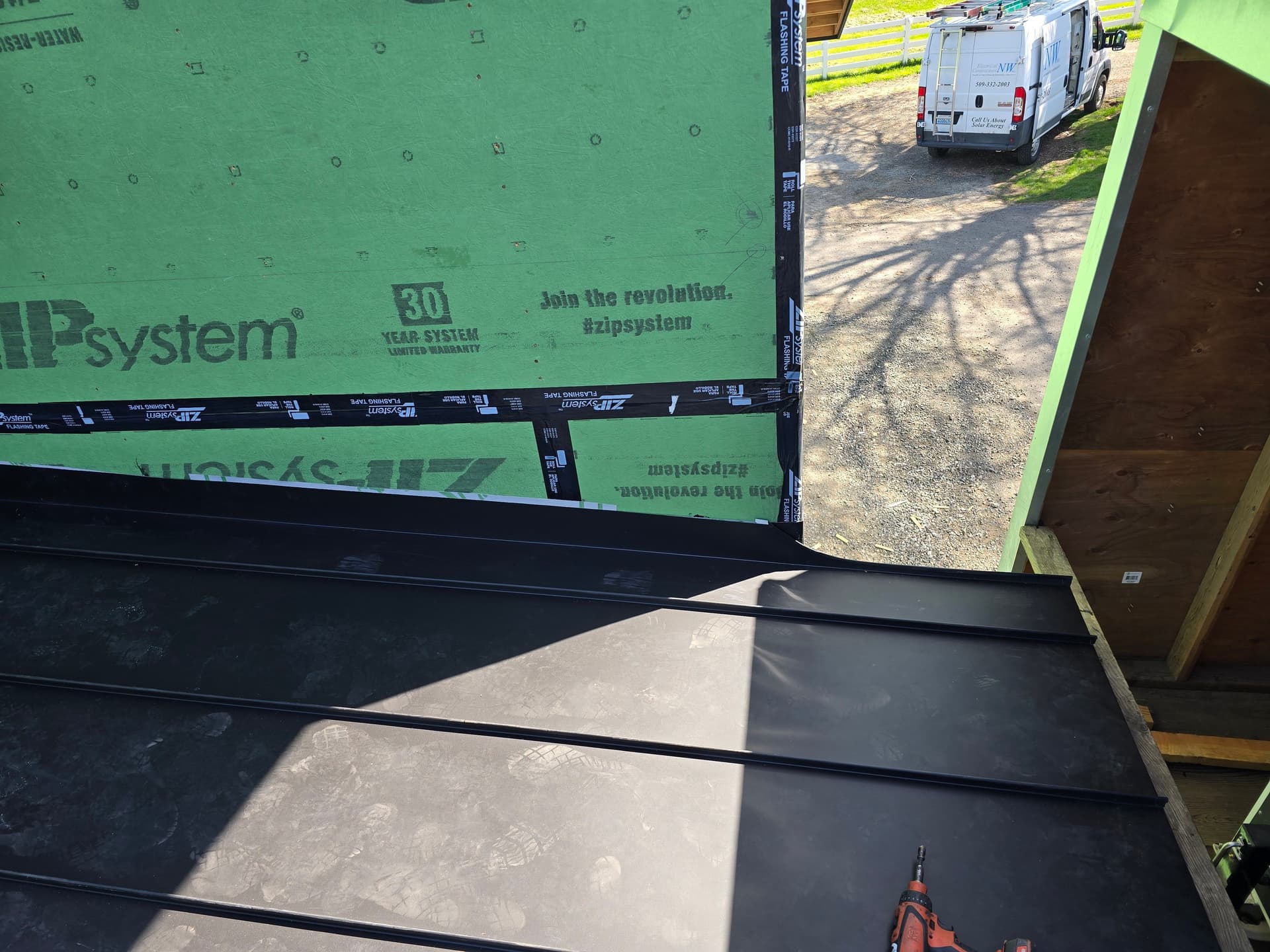
We also built the sidewall flashing directly into the standing seam panels rather than using separate add-on pieces. This is a detail that matters a lot at the wall-to-roof transition. Every separate flashing component is another potential weak point. When it's integrated, the connection is tighter and there's simply less that can go wrong.
The steel we used is 24 gauge - a heavier, more rigid option than the 26 or 29 gauge you'll find on lower-end installations. It holds its shape better, resists denting, and handles thermal expansion more predictably over time. On a new build like this, it's the kind of spec decision that pays off for the life of the structure.
A metal roof is a long-term investment, and it's worth doing right the first time. The planning that goes into panel length, material gauge, and flashing integration isn't just about craftsmanship - it's about building something that won't need to be touched again for a very long time.